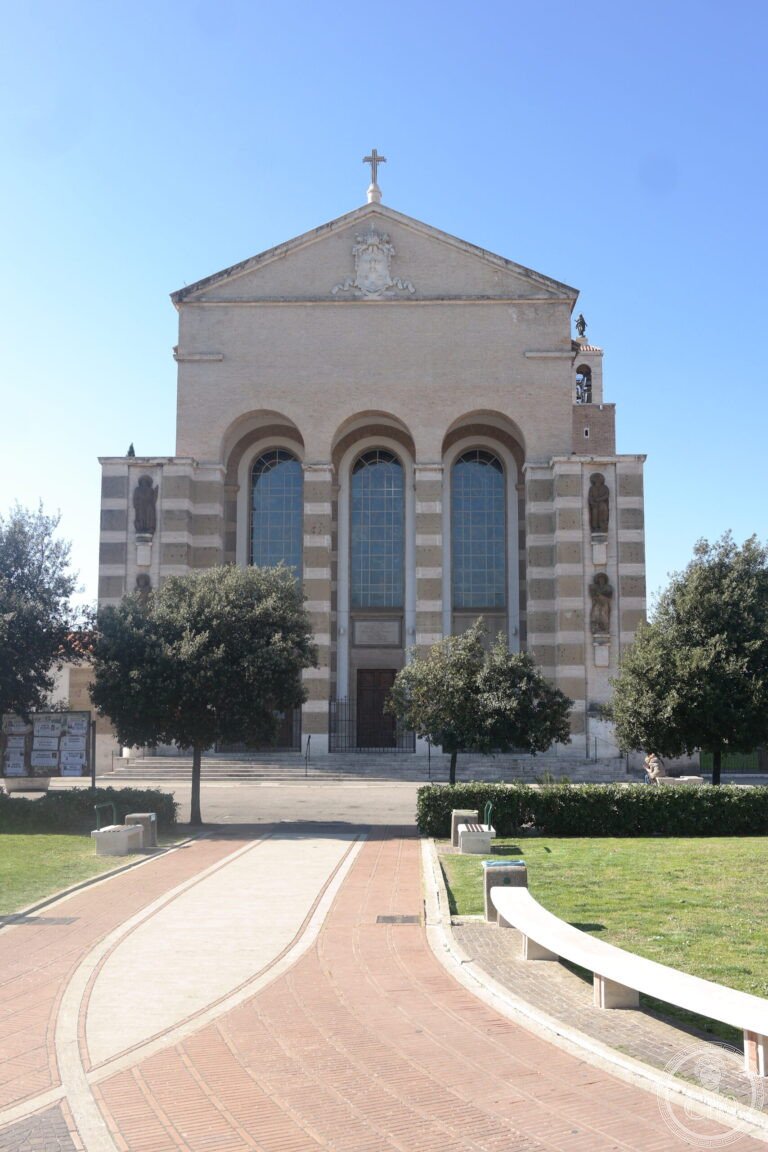
The Teatro Francesco Paolo Tosti in Ortona, Abruzzo, is a municipal theatre designed by engineer Tommaso Pincione and constructed in 1929–30. Sited in a panoramic position on the Passeggiata Orientale facing the Adriatic Sea, it represents the realisation of a civic project conceived nearly two decades earlier.
The impulse to build the theatre emerged in 1910, when Ortona’s civic leadership recognised the need for a modern cultural venue. The only theatrical space then available was located within the former seminary in the Terravecchia quarter, where the composer Francesco Paolo Tosti—a native of the city—had made his debut. In the early 1920s, a group of citizens founded a cooperative society to finance construction. After deliberation over suitable locations, the chosen site lay adjacent to the public garden, between Largo Ripetta and Via Garibaldi, on land formerly belonging to the Church of Santa Caterina. The municipal council granted the land to the cooperative in October 1922, paving the way for the theatre’s completion nearly a decade later.
About the Building
The theatre embodies the architectural idiom of early twentieth-century Italian civic modernism, sited to command views of the coast and positioned as a cultural focal point for the expanding city.
Details
- Designed by engineer Tommaso Pincione
- Constructed 1929–30
- Location: Ortona, Chieti province, Abruzzo
- Sited on the Passeggiata Orientale overlooking the Adriatic Sea
- Municipal theatre
Frequently asked questions
Who designed the Teatro Francesco Paolo Tosti?
Engineer Tommaso Pincione designed the theatre, which was constructed in 1929–30.
Why was the theatre named after Francesco Paolo Tosti?
Francesco Paolo Tosti was a notable composer and native of Ortona who made his theatrical debut in the city’s former seminary venue in the Terravecchia quarter.
When was the original idea for the theatre conceived?
The proposal to build a modern theatre in Ortona emerged in 1910, driven by the city’s civic leaders and cultural figures who viewed it as essential to urban life and civic identity.