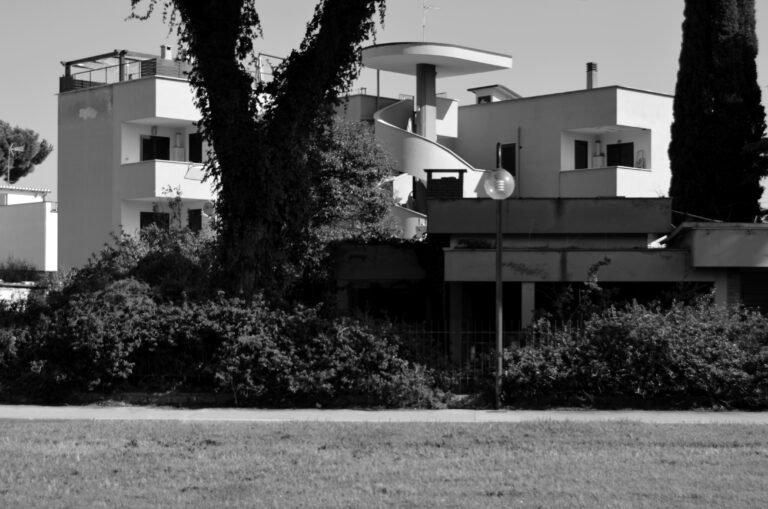
The command pavilion of the Royal School of Aeronautics in Florence was designed by architect Raffaello Fagnoni and completed in 1937–1938. This building exemplifies Italian Rationalist architecture, a movement that shaped public and institutional design during the interwar period.
The school complex, situated between Viale dell’Aeronautica and Via del Barco, functioned as the Royal School of Aeronautics before becoming home to the Aeronautical Military School Giulio Douhet and the Institute of Aeronautical Military Sciences. The command pavilion remains well preserved in both its exterior and interior, retaining much of its original furnishings.
About Raffaello Fagnoni
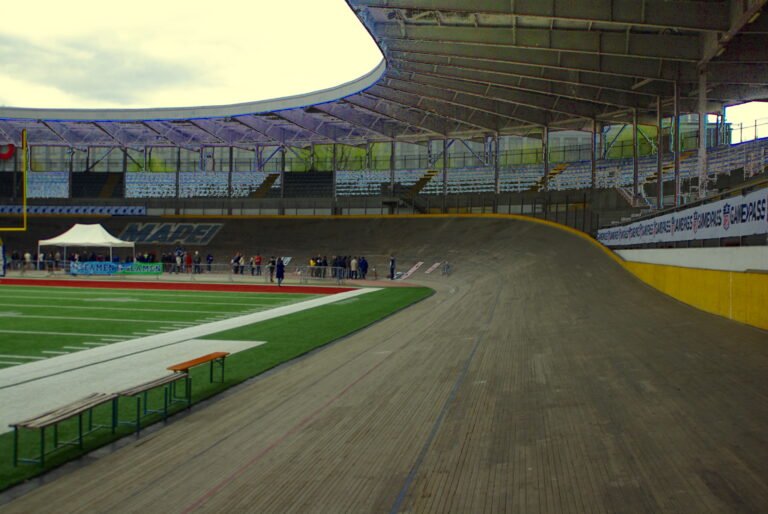
Raffaello Fagnoni (1901–1966) was an Italian architect and urban planner whose career spanned major institutional and civic projects. A Rome graduate, he was instrumental in founding the Faculty of Architecture in Florence and maintained a prominent role in Italy’s architectural scene until his death in the city. His diverse practice encompassed churches, public buildings, residential neighbourhoods, and sports facilities, with works ranging from the Olympic Stadium in Turin to numerous Florentine projects.
Details
- Architect: Raffaello Fagnoni
- Year: 1937–1938
- Location: Florence, Viale dell’Aeronautica and Via del Barco
- Movement: Rationalism
- Current use: Houses the Aeronautical Military School Giulio Douhet and the Institute of Aeronautical Military Sciences
Frequently asked questions
Who designed this building?
Raffaello Fagnoni, a prominent Italian architect and urban planner, designed the command pavilion. Fagnoni graduated in Rome and contributed to the founding of the Faculty of Architecture in Florence, maintaining an influential role in Italian architecture throughout his career.
What architectural movement does it represent?
The building is an example of Italian Rationalist architecture, a movement that characterized institutional and public design during the interwar period. The structure and its interior furnishings remain well preserved, illustrating the principles of this architectural approach.
What is the building’s current function?
Originally built as part of the Royal School of Aeronautics, the complex now houses the Aeronautical Military School Giulio Douhet and the Institute of Aeronautical Military Sciences.