
Palau de la Música Catalana
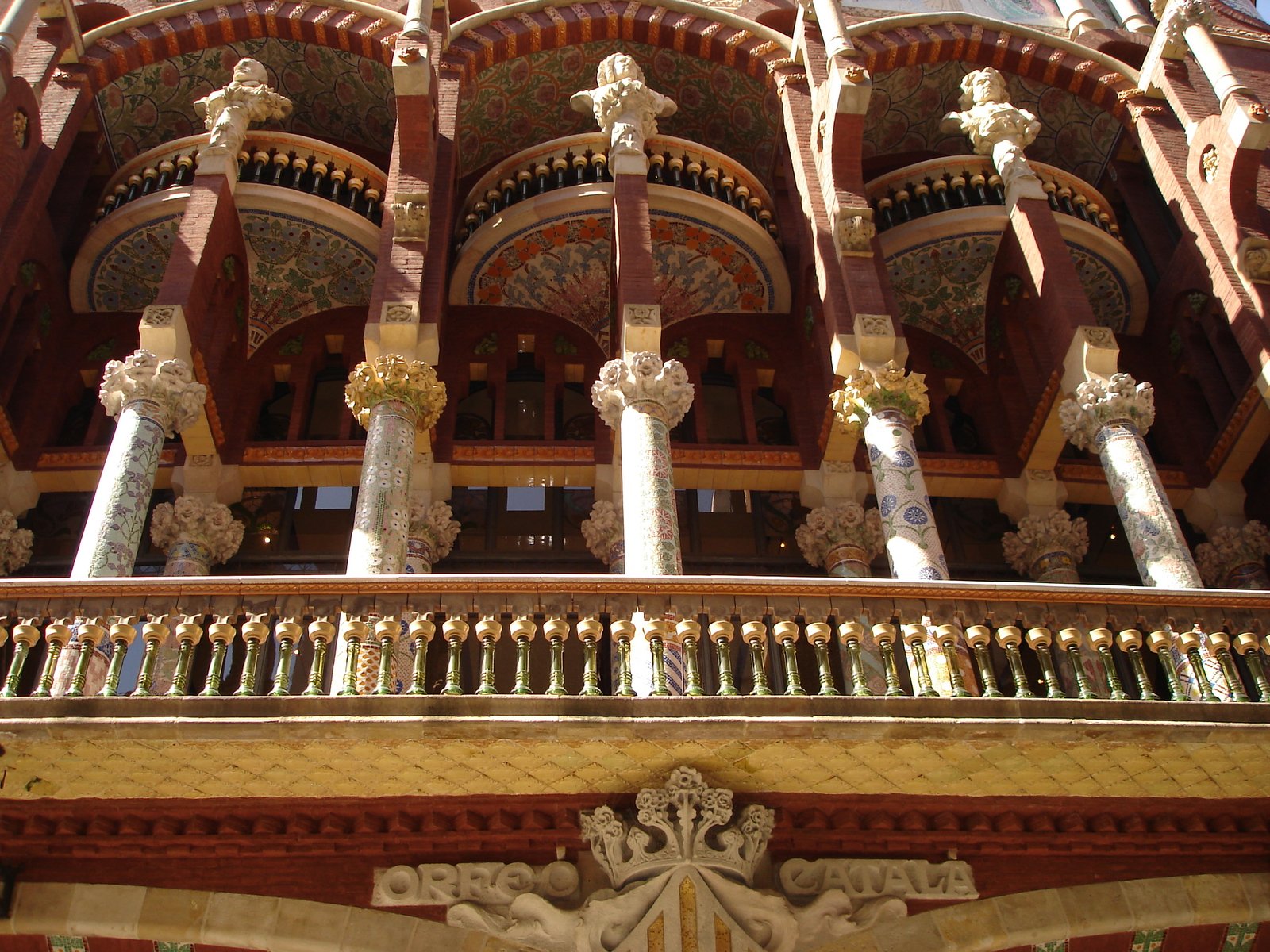
Lluís Domènech i Montaner raised the Palau de la Música Catalana between 1905 and 1908, a concert hall hung on iron and filled with glass. It is the only Art Nouveau concert hall on the UNESCO World Heritage List.
- Institution
- Palau de la Música Catalana (Fundació Orfeó Català)
- Location
- Barcelona, Catalonia, Spain
- Address
- C/ Palau de la Música 4–6, 08003 Barcelona
- Architect
- Lluís Domènech i Montaner (1850–1923) — 1905–1908
- Classification
- UNESCO World Heritage (inscribed 1997)
- Style
- Catalan Modernisme (Art Nouveau)
- Official site
- palaumusica.cat
Story
The Palau de la Música Catalana stands on a narrow street in Barcelona’s old quarter, a concert hall that seems to have grown rather than been built. Lluís Domènech i Montaner (1850–1923) raised it between 1905 and 1908 as the home of the Orfeó Català, the choral society that had commissioned it and paid for it through a public subscription. He worked fast. In under three years the building was finished, and it has been singing ever since. It remains the only concert venue in the Catalan Art Nouveau idiom to carry a UNESCO World Heritage listing, granted on 4 December 1997.
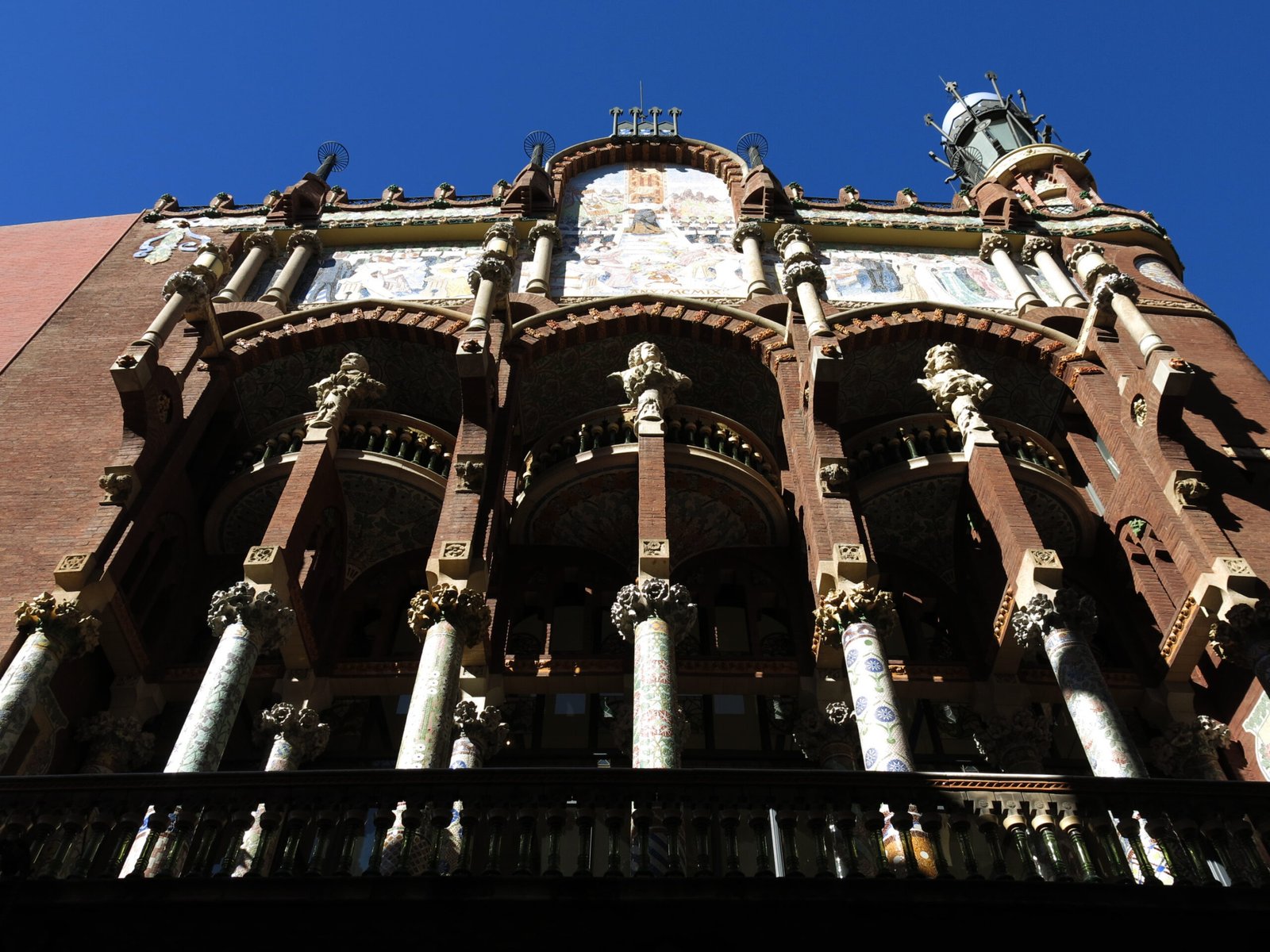
The architecture refuses the heaviness of stone. Domènech i Montaner hung the building on an exposed iron frame and then filled the walls with glass, so that daylight pours into a space most architects of his generation would have kept dark. The structure is a cage of metal dressed in colour. Red brick, ceramic, mosaic and ironwork meet across the surfaces, and floral motifs climb the columns until the interior reads less like a theatre than a greenhouse in bloom.
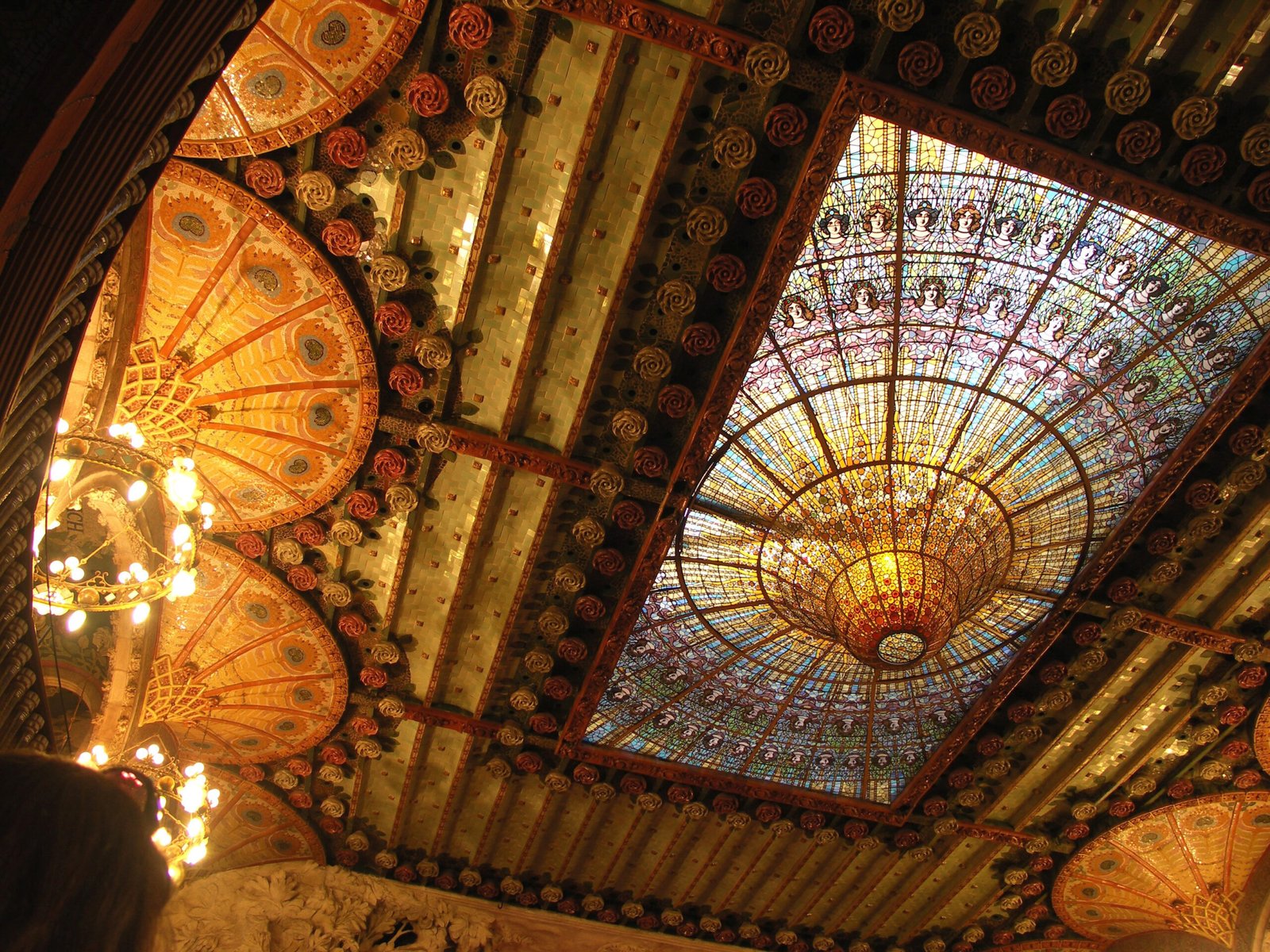
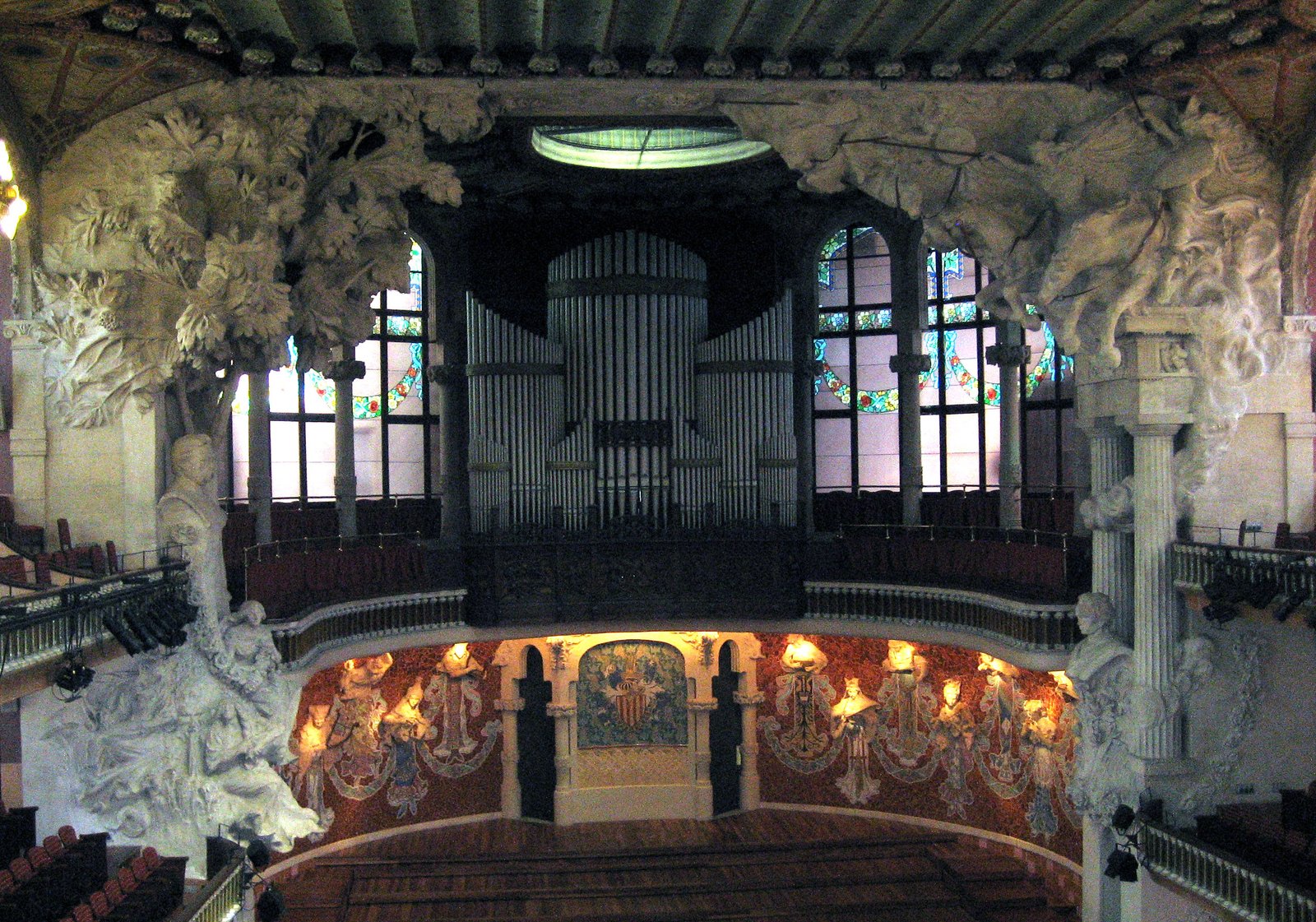
The concert hall is the heart of it. Overhead, an inverted skylight of stained glass curves downward into the room, a golden dome that represents the sun and gives the auditorium its extraordinary light. Antoni Rigalt designed the glass. Around the stage, a band of half-relief muses plays instruments drawn from many countries, the work of the sculptural team led by Eusebi Arnau. A bust of Anselm Clavé sits on one side, Beethoven on the other, with Wagner’s Valkyries seeming to ride out of the back wall above the organ.
“A magical music box that brings together all the decorative arts: sculpture, mosaic, stained glass and ironwork.”
Every craft in the building answers to another. Lluís Bru laid the mosaics, Miquel Blay carved the great corner group “La cançó popular catalana” that breaks free of the facade, and Pau Gargallo contributed further sculpture. None of it is ornament for its own sake. The decoration carries the structure’s logic outward, turning engineering into something closer to embroidery, so that a visitor rarely notices where the iron ends and the flowers begin.
That fusion is what places the Palau within the wider Art Nouveau movement that swept Europe around 1900, the same impulse that produced Horta in Brussels, Guimard in Paris and the Secession in Vienna, here spoken in an unmistakably Catalan accent. Domènech i Montaner gave the new national feeling of Catalonia a building to gather in. More than a century later the hall is still in daily use for concerts and guided visits, its skylight glowing over audiences who come as much for the room as for the music.
Map & access
GPS 41.3875837, 2.1752316 · Open in Google Maps · OpenStreetMap
In the Sant Pere quarter of Ciutat Vella; metro Urquinaona (L1/L4) is a few minutes’ walk.
Sources & resources
Partner Ambassador
This is an independent editorial entry, compiled by Cultural Heritage Online from public, openly-licensed sources as part of our Founding Partner pilot. The institution shown has not joined, endorsed, or paid for the programme, and is under no obligation. Joining as a Founding Partner at Legacy level would add category exclusivity for the institution’s area, quarterly visibility reporting, and direct editorial support. Palau de la Música Catalana is welcome to claim, expand, correct, or request removal of it at any time. If you represent this institution, write to info@culturalheritageonline.com.
Produced at Liberty Legacy level→ View the Founding Partner programme
Plan your visit
Open to visitors year-round; check local tourism offices for seasonal hours, admission fees, and guided tour availability. GPS coordinates: 41.3875837, 2.1752316.
Find it on the map
See this place and what’s around it →📷 Diventa un fotografo di Cultural Heritage Online
Condividi le tue foto dei luoghi: restano pubblicate con la tua firma come autore. Più vengono viste, più ti fai conoscere — e presto un concorso premierà le foto più apprezzate.
Accedi o registrati gratis per aggiungere una fotoDo you manage this place?
This page is read by travellers and heritage enthusiasts who find it on Google. Keep it accurate — and make it work for you. Free for non-profit heritage institutions.