

Musee Horta
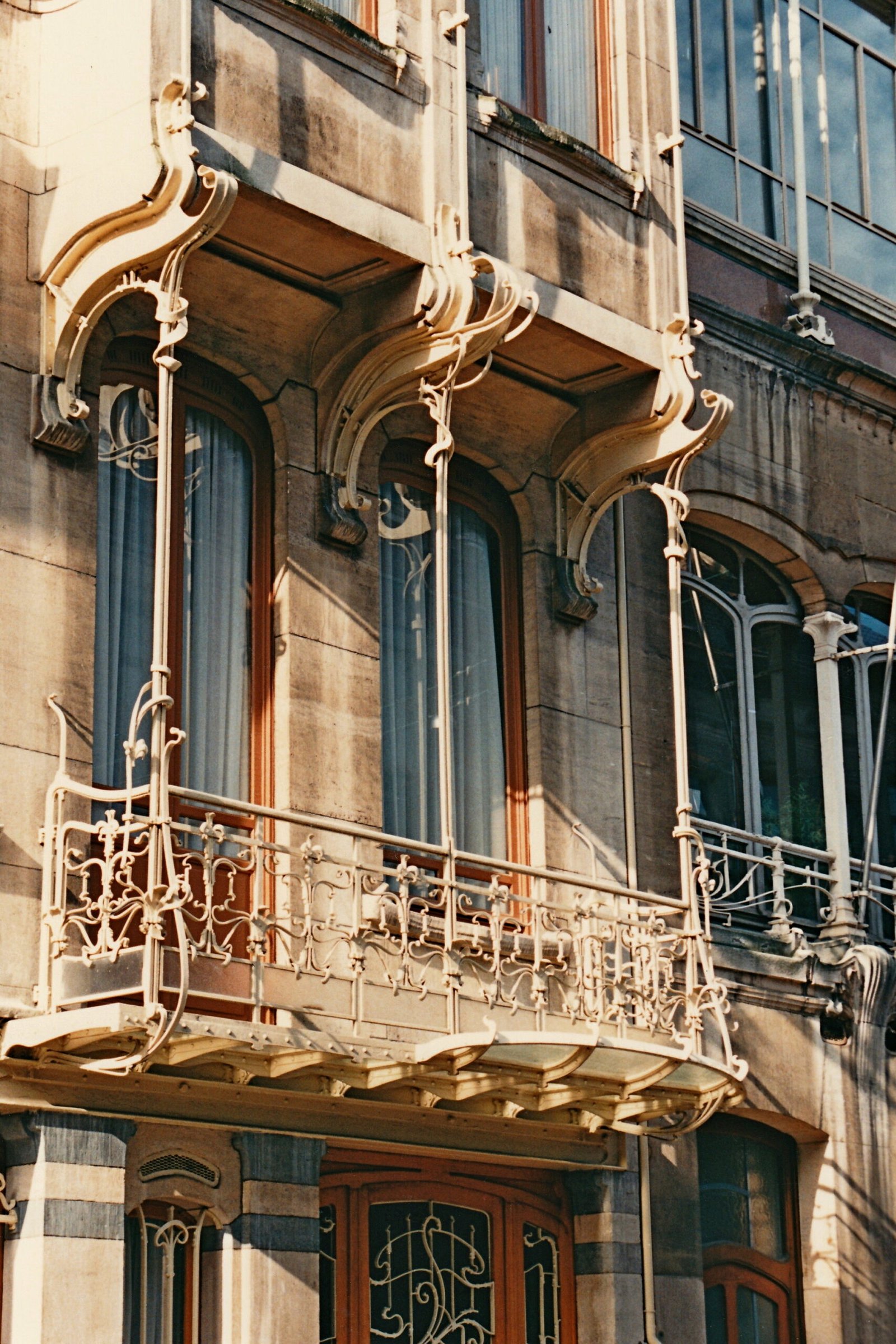
Victor Horta built his own house and studio here between 1898 and 1901. Now the Musee Horta, it is the only one of his UNESCO-listed Brussels townhouses open to the public.
At a glance
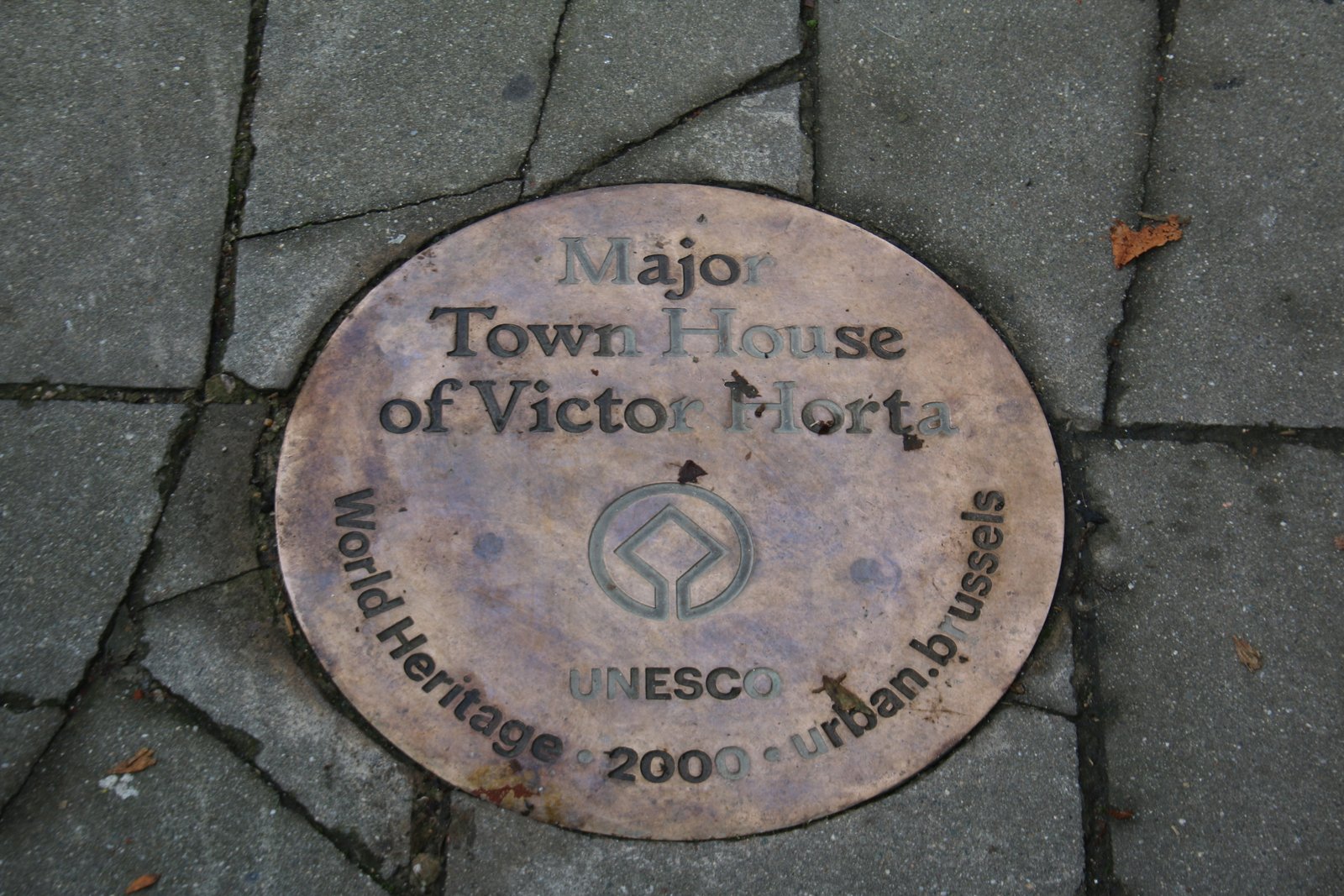
By 1898 Victor Horta had built enough commissions to design a house for himself. He chose a double lot on rue Americaine in the Ixelles commune, linking a private dwelling with an adjacent studio. Both structures share the same glass-and-iron vocabulary as the Hotel Tassel, but here Horta had no client to answer to, and the spatial experiment runs further. The glass roof over the staircase void floods three floors with diffused natural light. The studio wing, entered from the garden, has a full-height glass-and-iron facade that still reads as radical. UNESCO inscribed the house in 2000 alongside the Hotel Tassel, Hotel Solvay, and Hotel van Eetvelde.
Key facts
- Architect: Victor Horta (1861–1947), for himself
- Built: 1898–1901
- Address: 25 rue Americaine, 1060 Saint-Gilles, Brussels
- Now: Musee Horta (opened 1969, managed by Commune de Saint-Gilles)
- Status: UNESCO World Heritage Site (2000), public museum
- Hours: Tuesday to Sunday, 14:00–17:30; closed Monday and public holidays
- GPS: 50.824169, 4.355561 · Google Maps
History
Horta designed the house and studio simultaneously, treating them as a single compositional problem on two adjacent plots. The house is four storeys plus basement; the studio, to the right, is three storeys with a workshop floor and a glass north-facing wall suitable for painting or drafting. Horta used the commission to test ideas he could only partly realise in client work, including a continuous spatial spiral from the entry hall upward through the stair to the top-floor living area under the glass roof.
Horta lived in the house from 1901 until his appointment as director of the Academie royale des Beaux-Arts in 1927, after which his architectural language shifted toward a more classical modernism. The Art Nouveau interior he had built for himself he regarded as a period of experiment rather than a permanent style. He retained ownership until his death in 1947.
The Commune de Saint-Gilles acquired the property in 1961 and converted it into a museum dedicated to Horta work, opening the Musee Horta to the public in 1969. The building has since been carefully restored, returning the staircase ironwork, the leaded glass panels, and the majolica tile dado to their 1901 appearance. The archive holds original drawings, furniture, and photographs from the period.
What you see
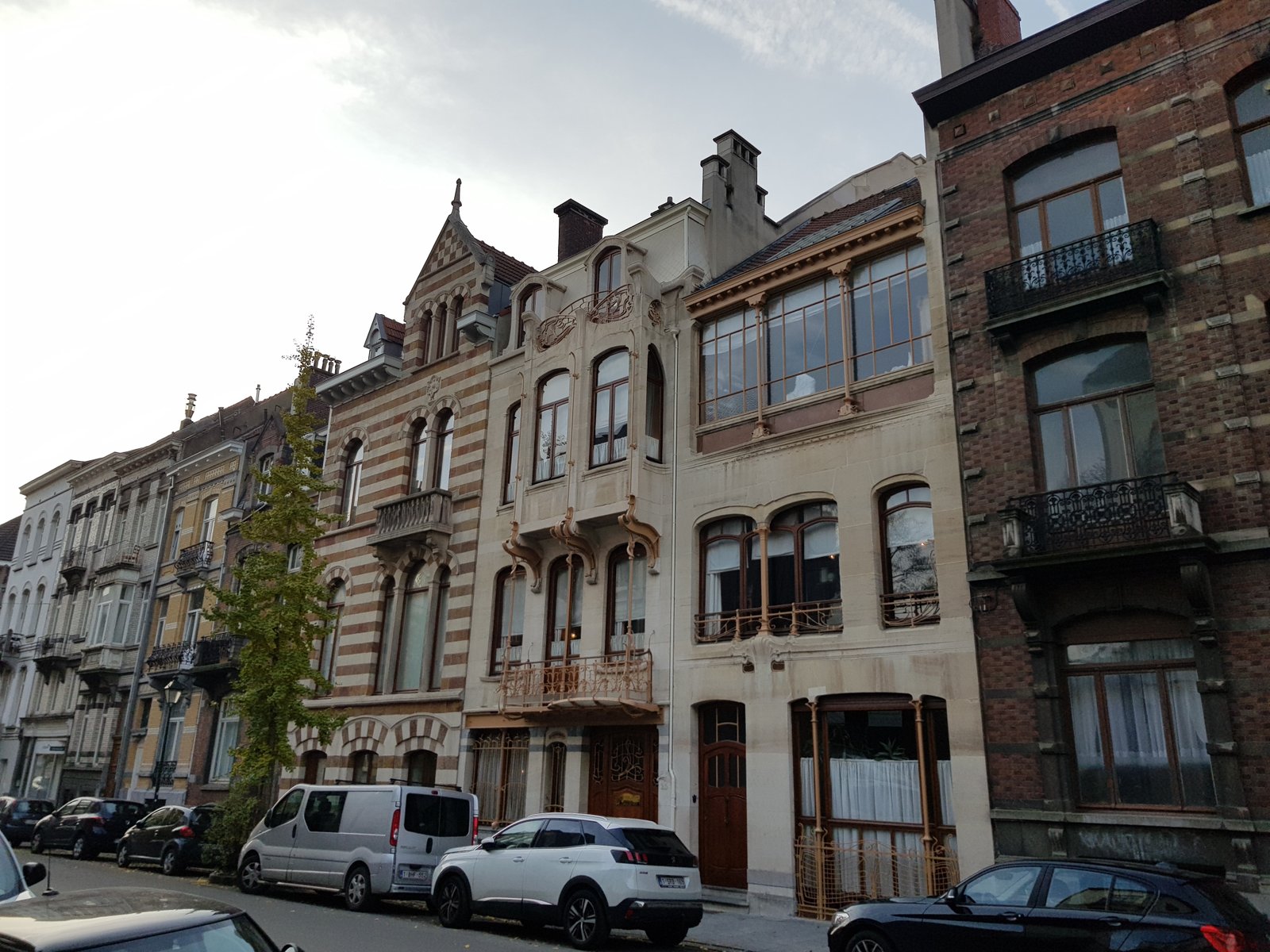
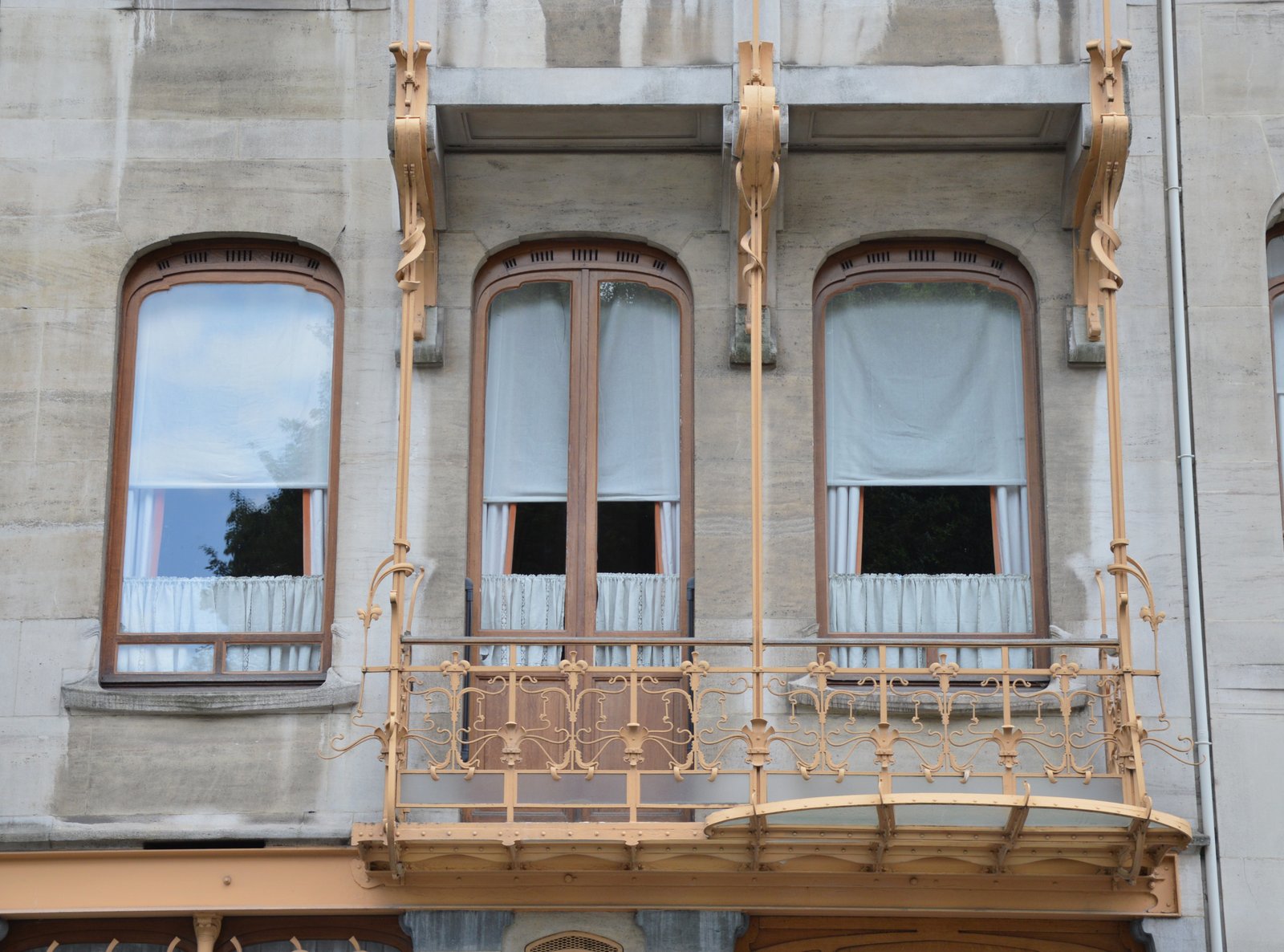
The facade on rue Americaine announces the interior quietly: a pale stone and glass ground floor, a curved bay window at first floor, and a studio wing to the right whose iron-grid facade is almost entirely glass. From the pavement the building looks slender; the sensation inside is the opposite. The central staircase void rises through all floors under a curved glass roof that glows in overcast Brussels light. The ironwork branches outward from the columns at each landing, the railing tendrils following the same curvilinear logic that Horta imposed on every surface.
The dining room retains original furniture and tiled alcove panels. The studio, entered from the house at first floor level, has the cool even light of a professional workshop combined with the decorative intensity of a private interior. The basement, converted for visiting exhibitions, holds drawings and original architectural models. The garden elevation in summer reveals the full rear facade, which is primarily glass.
Practical information
- Hours: Tuesday–Sunday 14:00–17:30 (last entry 17:00); closed Monday and public holidays.
- Tickets: Adults approximately €10; reductions for students and Brussels Card holders.
- Tours: Audio guide included; occasional guided tours in French and Dutch.
- Photography: Interior photography permitted without flash.
Getting there
From Brussels-Midi (Eurostar and Thalys terminus) take tram 81 or 82 toward Louise and alight at Janson, a two-minute walk from the museum. From Brussels-Central take Metro line 2 or 6 to Louise, then walk 15 minutes south and west through the Ixelles grid. Bus 54 stops at Waterloo-Janson, one block away.
Nearby
- Hotel Tassel (6 rue Paul-Emile Janson) — Horta first Art Nouveau commission, 15 min walk north-east
- Hotel Solvay (224 avenue Louise) — Horta complete domestic ensemble, 20 min walk
- Brussels Art Nouveau guide — neighbourhood walking route for the full Horta trail
Sources
- Musee Horta official site, hortamuseum.be
- UNESCO World Heritage List, Major Town Houses of the Architect Victor Horta, Brussels (2000), whc.unesco.org/en/list/1005
- Duliere, Cecile. Victor Horta: Memorial. Archives d architecture moderne, 1992.
Partner Ambassador
This is an independent editorial entry, compiled by Cultural Heritage Online from public, openly-licensed sources as part of our Founding Partner pilot. The institution shown has not joined, endorsed, or paid for the programme, and is under no obligation. Joining as a Founding Partner at Legacy level would add category exclusivity for the institution’s area, quarterly visibility reporting, and direct editorial support. Musée Horta is welcome to claim, expand, correct, or request removal of it at any time. If you represent this institution, write to info@culturalheritageonline.com.
Produced at Liberty Legacy level→ View the Founding Partner programmeFind it on the map
See this place and what’s around it →📷 Diventa un fotografo di Cultural Heritage Online
Condividi le tue foto dei luoghi: restano pubblicate con la tua firma come autore. Più vengono viste, più ti fai conoscere — e presto un concorso premierà le foto più apprezzate.
Accedi o registrati gratis per aggiungere una fotoDo you manage this place?
This page is read by travellers and heritage enthusiasts who find it on Google. Keep it accurate — and make it work for you. Free for non-profit heritage institutions.