You can experience Italy’s heritage without the crowds by trading a handful of saturated hotspots for the thousands of documented places around them. Slow heritage travel means fewer sites, more time, and routes built from sourced information rather than a top-ten list. This is a short, practical guide from Cultural Heritage Online.
Where the crowds actually are
Mass tourism in Italy concentrates in a small number of places: the historic core of Venice, the centre of Florence, a few squares in Rome, the coastal path of the Cinque Terre, the Amalfi coast in summer. The pressure has become heavy enough that Venice began trialling a day-tripper access fee in 2024, and several towns now actively manage visitor flow.
The crucial point is how narrow that concentration is. The same regions hold hundreds of towns, monuments, and landscapes that see a fraction of the footfall — not lesser places, simply less famous ones. Slow heritage travel is the deliberate choice to spend your time there.
What slow heritage travel means
Slow travel is not just “going somewhere quieter”. It is a different way of planning. Three principles define it:
- Fewer places, more depth. One town understood beats five towns photographed.
- Off-peak by design. Shoulder season and early mornings change a site completely.
- Routes from real information. Verified history, exact coordinates, and opening realities — not a viral list.
The reward is not only smaller crowds. It is a closer relationship to the place, and money that reaches communities outside the few overheated centres.
How to build an alternative route
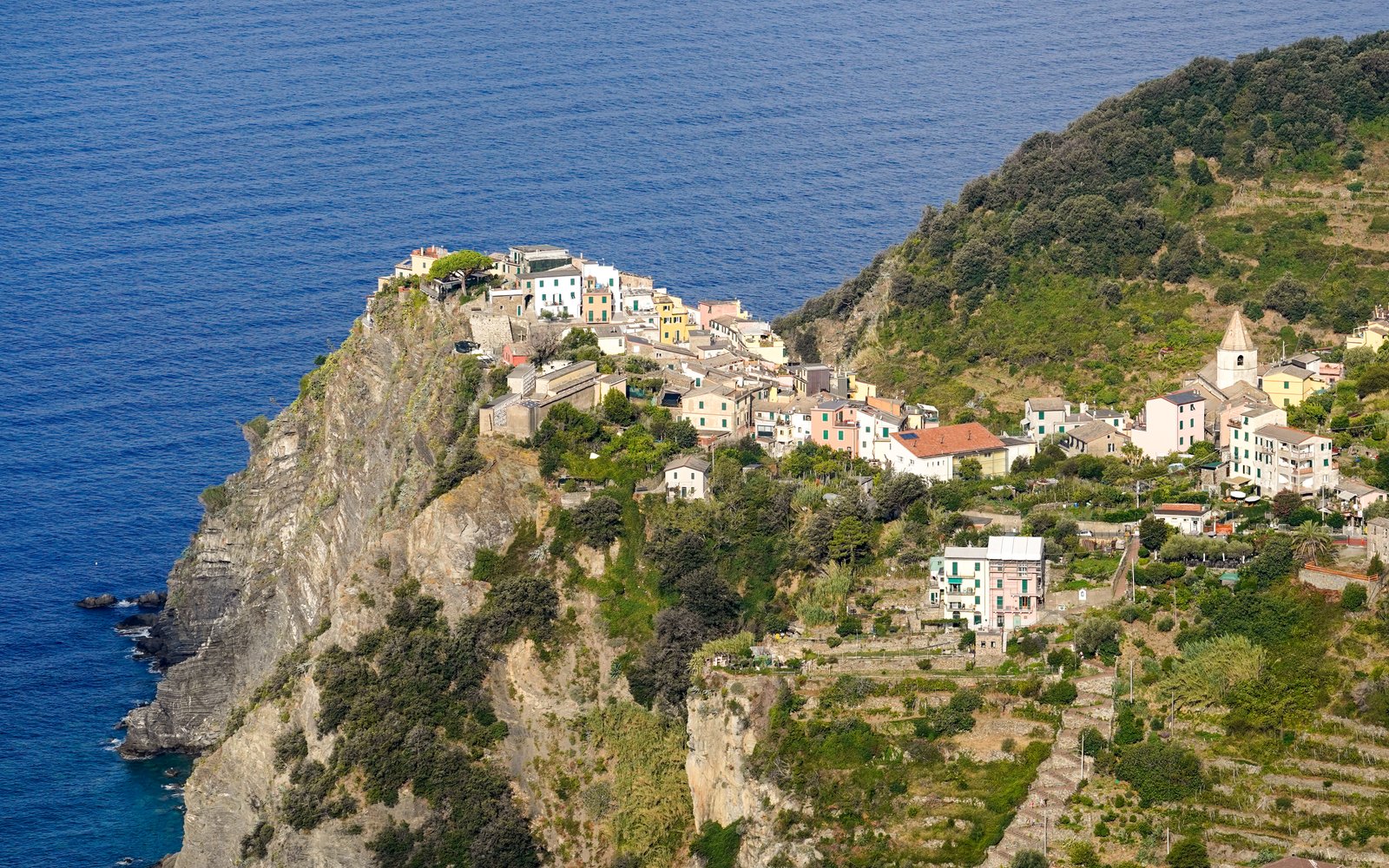
Start from a theme rather than a city: a single architectural movement, a period, a landscape type. A Liberty-architecture route through Lombardy, a Romanesque route through Emilia, a terraced-village walk in Liguria around Corniglia — each gives a trip its own logic and naturally pulls you off the main tourist axis.
Then anchor each stop to real data: location, history, and access. CHO documents more than 3,300 heritage places with sourced editorial cards and GPS coordinates, and the interactive map lets you filter by theme and see where a route’s stops actually cluster — including the quiet places next to the famous ones.
Take the route with you
Every CHO itinerary can be exported as a GPX or KML file and opened in a phone’s offline map or a GPS device, so the plan works without signal once you are on a hill path or a back road. That is the practical difference between a wish-list and a walkable route.
Plan a quieter route on the interactive map →
Frequently Asked Questions
How can I visit Italy without the crowds?
Avoid building a trip around only the most famous hotspots — Venice, Florence, central Rome, the Cinque Terre path, the Amalfi coast in summer. Travel in shoulder season, start early, and route through the lesser-known towns and sites in the same regions, which see a fraction of the footfall.
What is slow tourism or slow travel?
Slow travel means choosing fewer places and spending more time in each, travelling off-peak, and planning from verified information rather than viral lists. The aim is a closer experience of a place and a spread of visitor spending beyond a few overcrowded centres.
How do I plan an alternative cultural itinerary?
Start from a theme — an architectural movement, a period, a landscape — rather than a single famous city. Anchor each stop to real location and history data, and use a map that lets you filter by theme to find the quiet places next to the famous ones. CHO’s itineraries export as GPX or KML for offline use.
Is the Cinque Terre too crowded to visit?
The main coastal path and the larger villages are very busy in season. Going off-peak, walking the higher inland trails, and basing yourself in the quieter village of Corniglia — the only one not on the water — gives a far calmer experience of the same landscape.
Sources used in this article
- CHO interactive heritage map — 3,300+ documented places with GPS and GPX/KML export.
- CHO place_card Corniglia — Cinque Terre, Liguria.
- Reporting on Venice’s 2024 day-tripper access-fee trial (widely covered by international press).